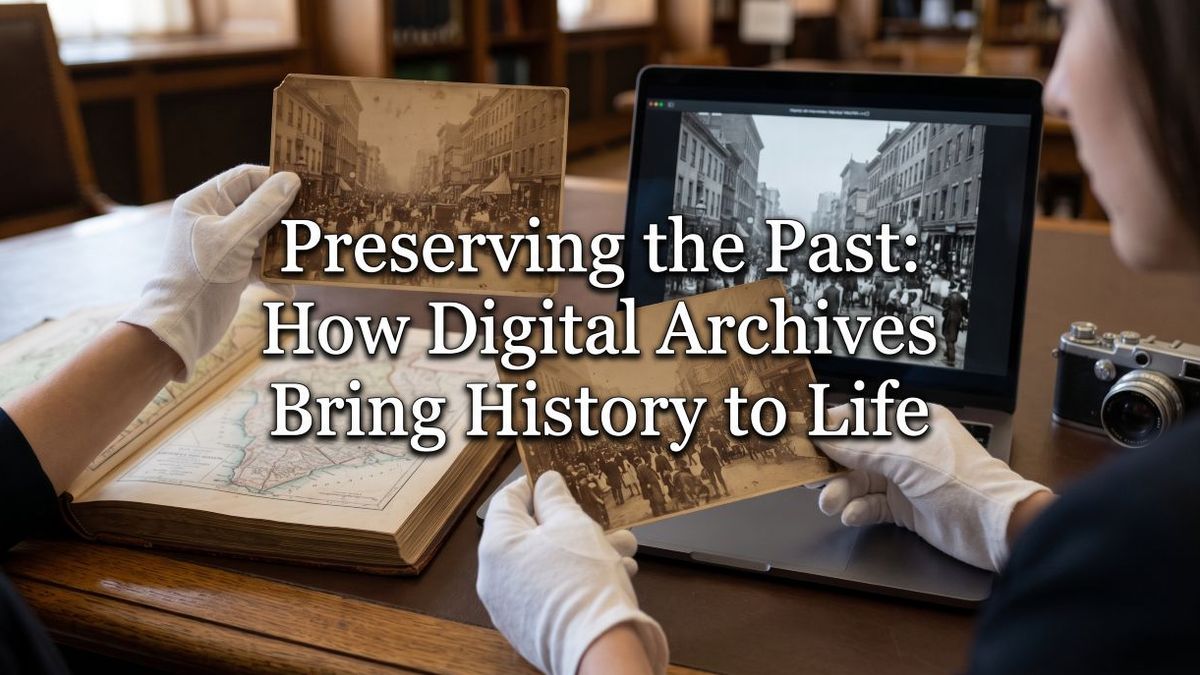
Digitization initiatives have fundamentally transformed how cultural heritage, institutional records, and community histories, including the history of the college, are preserved and experienced. For decades, rare photographs, documents, architectural plans, and oral histories were confined to storage vaults, accessible only to specialized researchers who could visit in person. Today, modern touch-enabled digital archives bridge the gap between physical preservation and public engagement, turning static collections into interactive, searchable experiences for visitors, patrons, and communities alike.
Interactive digital archives make historical materials accessible to anyone, anywhere—whether through responsive web portals or dedicated interactive touchscreen displays situated in high-traffic community spaces.
Understanding Interactive Digital Archives
While the terms are sometimes used interchangeably, digital archives and standard digital repositories serve different roles in the context of college digital collections. Standard repositories typically provide digital access to widely published works such as contemporary periodicals, books, and reports that exist across multiple locations. In contrast, digital archives, including the civil war digital collection, focus on preserving and displaying unique, historically significant items that exist only in limited quantities or as single originals, often found in college archives.
Archival materials often include:
- Original manuscripts, personal correspondence, and official records are essential components of the college's archival catalog.
- High-resolution historical photography and negative scans
- Architectural blueprints, municipal maps, and spatial surveys are often part of special collections in libraries digital collections.
- Audio recordings of oral histories, local speeches, and performances are cataloged to enhance the civil war digital collection.
- Video footage capturing major milestones, local traditions, and civic gatherings can be valuable components of digitized collections.
- Historic ephemera such as vintage event programs, posters, and flyers
Interactive archive systems bring these one-of-a-kind records together into an intuitive interface that allows visitors to explore history through touch, discovery, and search.
Core Elements of an Interactive Archive
A robust digital archive balances high-fidelity preservation with an accessible front-end experience, ensuring that the collection includes diverse materials. Achieving this balance requires several interconnected components, including robust research guides for users.
High-Resolution Digitization
Preserving delicate historical artifacts requires professional-grade scanning and photography that captures fine details without causing physical wear. Standard best practices typically specify capture at 400 to 600 DPI, accurate color calibration, and master preservation formats such as uncompressed TIFF files, alongside optimized digital copies for rapid loading on touchscreens and web interfaces.
Rich, Structured Metadata
Without structured descriptive information, digitized assets become impossible to locate, complicating access to valuable archive documents. Comprehensive archives incorporate standardized metadata fields that enable discovery:
- Descriptive Information is essential for the effective organization of libraries digital collections. Titles, dates of origin, subjects, event tags, geographic locations, and archive documents are crucial for effective cataloging.
- Technical Details: This section outlines how the digital collection contains various formats of historical data. Resolution, original physical dimensions, and capture equipment.
- Rights and Provenance: Copyright status, source collection, donor attributions, and usage rights are crucial for the integrity of college digital collections, ensuring proper management of the archival collections.
Intuitive Interactive Interface
An archive is only as valuable as its usability. Whether displayed on large-format interactive wall kiosks or accessed on a mobile browser, interfaces must offer access to the archives and special collections.
- Instant full-text search across records and accompanying descriptions facilitates access to digital resources in college archives.
- Category filtering by era, subject matter, media type, or physical location
- High-resolution zooming tools that let users examine fine details on historic imagery
- Accessible, responsive design compliant with accessibility standards ensures clear navigation for all age groups and abilities in college digital archives.
Reliable Cloud Infrastructure
Long-term preservation of college archives relies on secure storage and scalable delivery methods for digital collections, ensuring access to important archive documents. Maintaining offsite backups, implementing checksum verification to prevent file corruption, and utilizing cloud-hosted content delivery networks ensure fast performance on touchscreens without local server maintenance.
Bringing Archives into Public Spaces
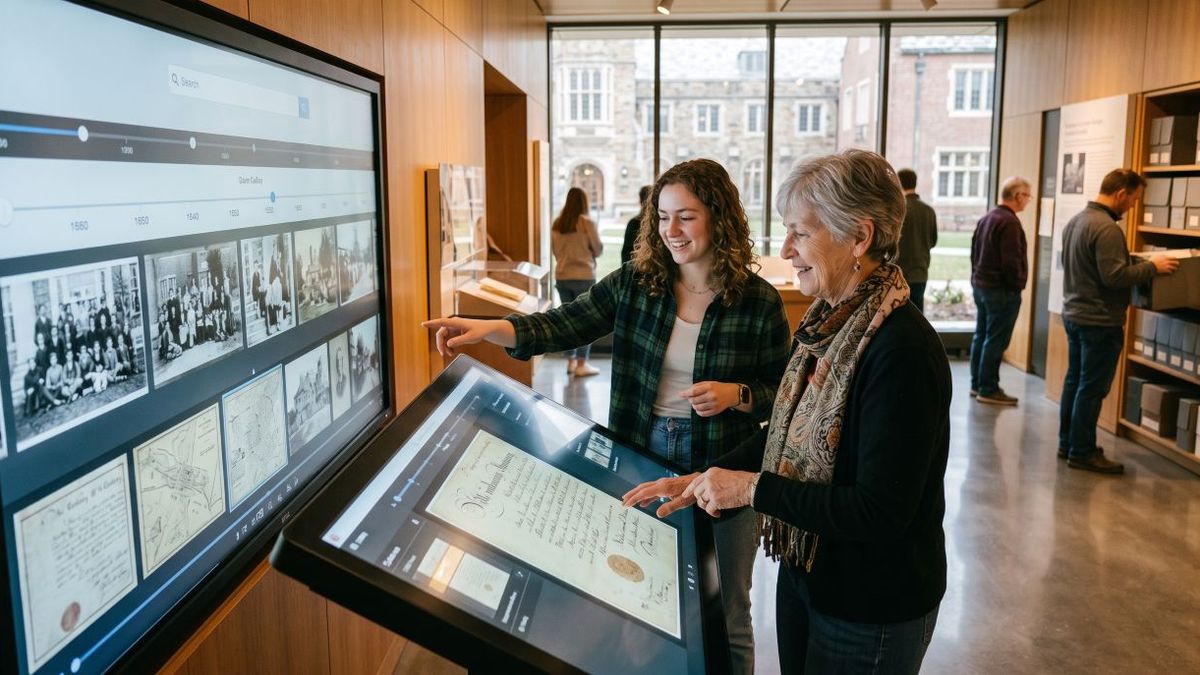
While web-based databases are essential for remote study, bringing digitized archives into physical venues transforms how audiences connect with heritage and provides access to invaluable resources. Placing interactive touchscreen displays in public lobbies, libraries, civic centers, and cultural facilities creates dedicated spaces for exploration of college digital collections and their archival collections.
Interactive displays provide key advantages for public spaces:
- Passive Discovery: Large visual displays, such as those featured in the collaborative digital project, attract passing foot traffic, encouraging casual visitors to interact with records they might not have searched for online.
- Intergenerational Usability: Intuitive touch interfaces remove technological barriers, making digital browsing comfortable for children, families, and seniors alike.
- Curated Storytelling: Organizations can highlight specific historical milestones, curate rotating thematic exhibitions, or feature interactive timelines that illustrate community development over decades, showcasing the alumni magazine.
- Connecting Past with Present: The oral history collection serves as a bridge between generations, providing insights into the cultural context of the 1909 era. Interactive recognition platforms allow institutions to pair historic achievements and founding legacies directly alongside modern milestones, creating a living timeline that evolves over time.
Advanced Search and Discovery Capabilities
Modern digital archives empower visitors to locate specific records through versatile discovery tools, enhancing access to digital resources.
- Keyword and Boolean Logic: Combining terms or searching exact phrases helps pinpoint specific occurrences across large document collections.
- Faceted Filtering: Visitors can narrow expansive collections down to specific decades, specific neighborhoods, or distinct media formats such as audio recordings or blueprints.
- Interactive Timelines: Users can swipe chronologically through history, exploring contemporaneous events and viewing related documents within their historical context.
- Visual Exploration: The digital collection includes a rich variety of historical artifacts for exploration. Gallery grids and image-centric browsing let users wander through visual records without needing a predetermined research topic.
Planning and Launching a Digital Archive
Establishing an interactive digital archive requires structured planning, steady workflows, and sustainable technology, particularly for collaborative digital projects. Organizations initiating a project typically follow a clear implementation pathway:
1. Scope and Needs Assessment
Identify the core physical materials requiring preservation and public accessibility within the archives and special collections. Prioritizing unique, high-demand, or fragile collections helps build early momentum and demonstrates immediate value to stakeholders.
2. Policy and Rights Framework
Establish clear guidelines for copyright management, donor agreements, privacy considerations, and access permissions. Defining collection boundaries early ensures smooth operations as new records are contributed.
3. Digitization and Metadata Workflows
Establish structured scanning procedures and consistent naming conventions. Applying controlled vocabularies and standardized metadata templates across batches ensures every uploaded asset remains fully searchable.
4. Platform Selection
Choose an archive platform tailored for interactive public engagement. Key considerations include cloud-hosted architecture to avoid local server upkeep, intuitive administrative tools for non-technical staff to update media, and versatile software that runs reliably on interactive touchscreen hardware as well as web browsers.
5. Community Engagement and Ongoing Maintenance
Promote the collection through public launch events, educational programs, and guided demonstrations. Inviting community members to contribute their own photographs, oral stories, and identifications of historical images fosters a collaborative sense of shared heritage, enriching the oral history collection.
Future Trends in Interactive Preservation
Digital archiving continues to benefit from rapid technological advances:
- Automated Recognition in digitized collections enhances the efficiency of managing and retrieving historical assets. Optical character recognition (OCR) and automated transcription convert typed text, handwritten records, and audio recordings into fully searchable digital files in seconds, enhancing the archival collections.
- Enhanced Visual Exploration of digitized collections provides access to digital versions that can offer deeper insights into the history of the college. Advanced image processing enables deep zoom capabilities, side-by-side historical comparisons, and interactive maps that overlay archival photographs directly onto modern streetscapes.
- Hybrid Engagement Displays: These displays often feature materials from the yearbook and other archival collections. Communities increasingly integrate physical museum objects and display cases with embedded digital touchpoints, allowing visitors to view an original physical artifact while exploring hundreds of related digital pages and media files on an adjacent screen.
Preserving History for Tomorrow
Interactive digital archives safeguard irreplaceable historical assets while making them dynamic, engaging, and accessible to everyone through college digital collections. By pairing high-fidelity preservation with responsive touchscreen technology, organizations transform fragile historical collections into active community cornerstones that honor the past, celebrate ongoing progress, and inspire future generations.