Organizations implementing interactive touchscreen kiosks for visitor engagement, information displays, wayfinding systems, or recognition purposes face crucial software decisions that fundamentally determine user experience quality, content management effectiveness, hardware compatibility, and operational sustainability. The market for touchscreen kiosk software ranges from specialized platforms engineered for interactive experiences to repurposed digital signage solutions and basic web-based approaches, each presenting unique capabilities, constraints, and investment models.
This detailed analysis examines prominent touchscreen kiosk software platforms using weighted evaluation criteria including interaction responsiveness, content management functionality, hardware versatility, deployment capabilities, accessibility standards, and lifetime operational costs. Educational institutions, cultural organizations, corporate facilities, and public venues require systematic assessment frameworks revealing which platforms deliver professional interactive experiences while aligning with organizational technical resources and financial parameters.
Why Software Selection Outweighs Hardware Decisions
The interactive display hardware sector has experienced significant commoditization over recent years. Commercial-grade touchscreen displays from established manufacturers provide consistent performance at competitive pricing, with 43-inch to 55-inch interactive units available from $800-$2,500 and larger configurations scaling proportionally. Hardware specifications have standardized around dependable capacitive or infrared touch capabilities, sufficient processing capacity, and reliable commercial durability ratings.
Software platforms diverge dramatically. The system powering your touchscreen kiosk determines whether visitors encounter smooth, intuitive interactions or experience problematic lag, unclear navigation, and restricted functionality. Research indicates that specialized interactive kiosk software creates fundamentally different user experiences compared to modified digital signage platforms or basic web presentation tools.
This software selection influences:
- Interaction responsiveness affecting whether touch inputs feel immediate and natural or delayed and erratic
- Content management efficiency determining whether non-technical personnel can update displays autonomously or need IT intervention
- Feature accessibility enabling advanced functions like search capabilities, filtering options, multimedia integration, and usage analytics
- Hardware versatility allowing organizations to choose optimal display equipment without software compatibility restrictions
- Deployment expandability supporting individual installations through distributed networks with centralized administration
- Accessibility standards ensuring displays accommodate all visitors including those with disabilities
- Long-term sustainability reflecting vendor reliability, update consistency, and ongoing platform development
Organizations implementing interactive touchscreen solutions should emphasize software assessment before confirming hardware purchases. Appropriate software platforms accommodate diverse hardware choices while delivering consistent professional experiences. Poor software decisions create problems that even premium hardware cannot resolve.
Essential Evaluation Criteria for Interactive Kiosk Software
Establishing structured evaluation frameworks enables systematic comparison across competing digital kiosks. Based on typical institutional needs for public-facing interactive displays, these criteria prove most decision-critical:
1. Touch Interaction Quality (Weight: 20%)
Touch responsiveness directly shapes user experience and engagement levels. Professional interactive kiosk software provides immediate visual feedback, fluid animations, and intuitive gesture recognition that feels natural to visitors. Inadequate touch implementation creates frustration undermining the installation's entire purpose.
Key Requirements:
- Touch response latency below 100 milliseconds for immediate feedback
- Visual confirmation of interactions through highlighting, animations, or transitions
- Appropriate touch target dimensions (minimum 44×44 pixels per accessibility standards)
- Multi-touch gesture recognition for zoom, pan, and natural navigation
- Palm rejection technology preventing unintended touches
- Fluid scrolling and animations maintaining 60+ frames per second
- Haptic feedback capabilities where hardware enables it
Platforms specifically engineered for interactive experiences prioritize touch quality over solutions adapted from passive digital signage applications. Testing touch responsiveness across varied content types reveals substantial performance differences between purpose-built and adapted platforms.
2. Content Management System Capabilities (Weight: 18%)
Sustainable interactive kiosk deployments require content management systems empowering non-technical personnel to update information autonomously without continuous developer support. CMS efficiency determines whether displays remain current or become outdated as update obstacles discourage maintenance.
Critical Capabilities:
- Intuitive web-based interfaces accessible from any device and location
- Template-driven content creation preserving visual consistency
- Rich media compatibility for images, videos, PDFs, and interactive components
- Bulk import functionality for efficiently adding extensive content collections
- Search and filtering mechanisms help shoppers locate specific information on digital displays.
- Scheduling features for time-sensitive content activation
- Multi-user workflows with content approval sequences
- Version control tracking modifications and enabling reversions when needed
- Preview functionality displaying exactly how content will render
Organizations implementing digital recognition solutions particularly benefit from CMS platforms engineered specifically for profile-based content rather than generic digital signage tools.
3. Hardware & Platform Flexibility (Weight: 15%)
Software requiring specific hardware creates vendor dependency situations restricting procurement choices, escalating costs, and complicating future expansions or replacements. Platform-independent software provides freedom to select optimal hardware matching installation requirements and budgets.
Flexibility Requirements:
- Cross-platform compatibility (Windows, Android, ChromeOS, Linux)
- Hardware manufacturer neutrality without proprietary equipment mandates
- Display size adaptability from tablets through large-format installations
- Touch technology compatibility (capacitive, infrared, optical) is vital for interactive touch screen kiosks.
- Resolution scaling preserving quality across different pixel densities
- Orientation flexibility for portrait, landscape, and rotating displays
- External peripheral integration (printers, scanners, card readers)
- Network connectivity versatility (ethernet, WiFi, cellular, offline operation)
Web-based kiosk software frequently provides maximum hardware flexibility because functionality operates in standard browsers rather than requiring platform-specific native applications. This browser-based methodology enables deployment across virtually any modern touchscreen device.
4. Deployment & Scalability (Weight: 12%)
Single kiosk installations require different software capabilities than distributed networks managing numerous displays across multiple locations. Scalability determines whether platforms expand with organizational needs or necessitate migration to different solutions as deployments grow.
Scalability Factors:
- Centralized administration controlling all displays from unified dashboards
- Grouped device management targeting content to specific locations or categories
- Remote monitoring displaying device status, connectivity, and error conditions
- Automatic software updates deploying improvements without individual device access
- Content synchronization ensuring consistency across all installations
- Performance sustainability as device counts increase in interactive touch screen environments.
- Licensing models scaling economically without per-device penalties
Purpose-built platforms demonstrate how specialized solutions scale from single displays through campus-wide networks while maintaining centralized management efficiency.
5. Feature Richness & Interactivity (Weight: 12%)
Interactive kiosks should provide engaging experiences beyond passive content presentation. Advanced features transform static information into explorable, searchable, and personally relevant experiences encouraging extended engagement.
Advanced Features:
- Robust search functionality enabling rapid discovery of specific content
- Dynamic filtering by categories, dates, achievements, or custom attributes
- Multimedia integration incorporating photos, videos, audio, and documents
- Social sharing allowing visitors to transmit content to personal devices
- QR code generation extending experiences beyond physical displays
- Data collection gathering analytics about usage patterns and popular content
- Personalization adapting content based on visitor selections or profiles
- Multilingual support serving diverse audiences
- Interactive maps and wayfinding for navigation applications
- Form submission for surveys, feedback, or information requests
Organizations deploying interactive kiosk solutions should distinguish between platforms offering genuinely interactive experiences versus enhanced slideshows marketed as interactive.
6. Accessibility & ADA Compliance (Weight: 10%)
Federal accessibility mandates under the Americans with Disabilities Act require that digital information systems provide equivalent access for users with disabilities. Educational institutions and government agencies face particularly stringent compliance obligations, but accessibility benefits all organizations by ensuring inclusive experiences.
Accessibility Requirements:
- WCAG 2.1 AA conformance for digital content presentation
- Screen reader compatibility enabling visually impaired access
- Keyboard navigation alternatives to touch-only interfaces
- Sufficient color contrast ratios (minimum 4.5:1 for text, 3:1 for interface components)
- Text resizing without functionality loss
- Alternative text for all meaningful images
- Captions and transcripts for audio and video content
- Adjustable timeout periods accommodating varied interaction speeds
Accessibility compliance documentation should include VPAT (Voluntary Product Accessibility Template) statements from vendors detailing specific conformance levels achieved.
7. Security & Data Protection (Weight: 8%)
Public-facing kiosks require security architectures protecting both the systems themselves and any data they collect or present. Security failures can expose organizations to liability, data breaches, or malicious exploitation.
Security Considerations:
- Kiosk lockdown preventing access to underlying operating systems
- Automatic session resets returning to home screens after inactivity
- Encrypted data transmission for any information sent across networks
- Secure content management access with role-based permissions
- Audit logging tracking all content modifications and administrative actions
- Privacy compliance for any personal information displayed or collected
- Protection against common attack vectors (XSS, SQL injection, etc.)
- Regular security updates addressing newly discovered vulnerabilities
Cloud-based platforms shift security responsibilities partially to vendors but introduce considerations around data residency, vendor access policies, and third-party subprocessor practices.
8. Total Cost of Ownership (Weight: 5%)
Budget constraints affect all technology decisions. Accurate cost comparison requires examining multi-year total ownership expenses rather than initial purchase prices alone, as subscription models, support fees, and hidden costs accumulate differently across platforms.
Cost Components:
- Software licensing (subscription vs. perpetual vs. usage-based)
- Initial setup and implementation services
- Content creation or migration expenses
- Hardware acquisition may be necessary if not included in the digital kiosk solution.
- Installation and configuration labor
- Staff training requirements
- Ongoing maintenance and support fees
- Upgrade costs as needs evolve
- Replacement or expansion expenses
Some platforms advertise minimal initial costs while imposing substantial ongoing fees. Others require higher upfront investment but minimize recurring expenses. Five-year total cost analysis reveals true economic differences.
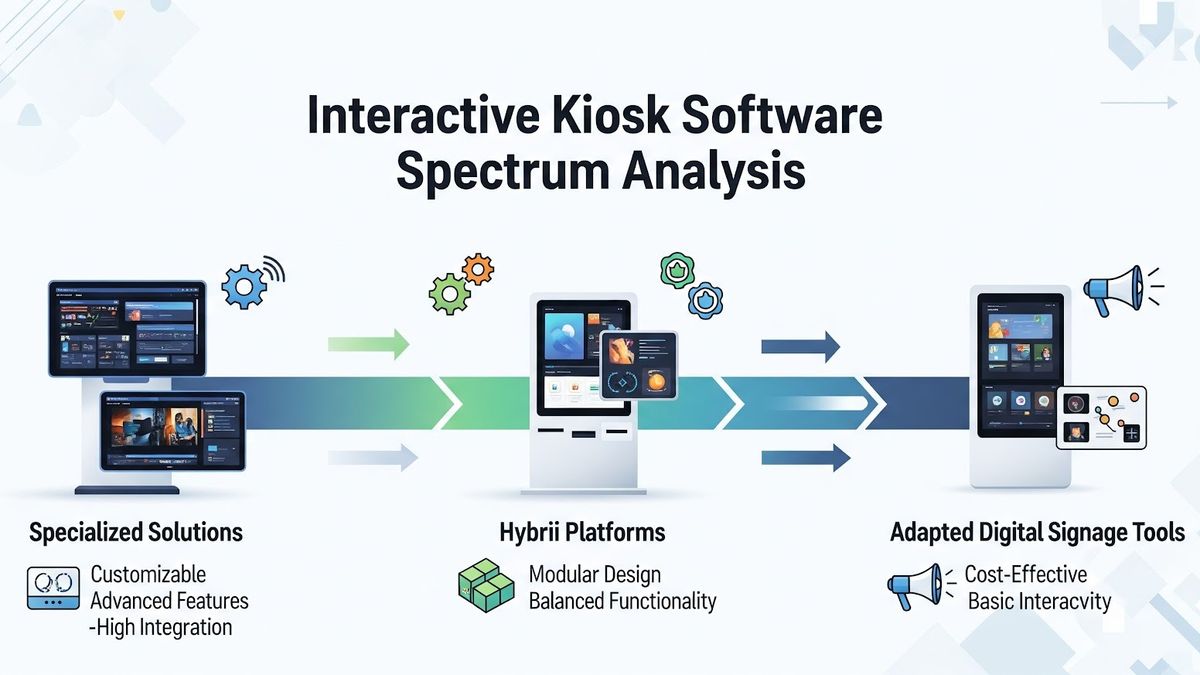
Detailed Platform Comparison: Leading Solutions
This analysis evaluates representative platforms across the interactive kiosk software spectrum, from specialized solutions to adapted digital signage tools:
Touchstone Digital Solutions: Purpose-Built Interactive Recognition Platform
Overview of interactive touch screen kiosks highlights their effectiveness in various environments. Touchstone Digital Solutions provides comprehensive touchscreen kiosk software engineered specifically for recognition applications including halls of fame, donor walls, achievement displays, and historical timelines across educational, nonprofit, corporate, and community contexts.
Strengths of interactive touch screen kiosks include user engagement and ease of access.
- Recognition-optimized features including automated ranking systems, unlimited capacity for honorees, and sophisticated search functionality specifically designed for discovering people, achievements, and stories
- Hybrid architecture combining web-based content management with progressive web app technology delivering native-level performance without platform restrictions
- Accessibility compliance with WCAG 2.1 AA conformance validated through independent audits
- Hardware versatility supporting any modern touchscreen regardless of operating system or manufacturer
- Comprehensive implementation assistance including content migration, hardware guidance, staff training, and ongoing technical support for digital kiosks.
- Proven dependability demonstrated through extensive installations nationwide with exceptional uptime
- Unified online and physical experiences enabling web-accessible recognition displays complementing physical kiosks from shared content management
Ideal For:
- Educational institutions (K-12 schools, colleges, universities)
- Athletic programs seeking to honor teams, athletes, and achievements
- Nonprofit organizations highlighting donors, volunteers, and community impact
- Corporate recognition programs celebrating employees, milestones, and company history
- Any organization prioritizing professional recognition experiences with comprehensive support
Pricing: Contact for customized quote based on specific requirements and installation scope
Learn More: Touchstone Digital Solutions
Intuiface: Enterprise Interactive Experience Platform
Overview: Intuiface provides code-free interactive presentation software supporting complex multi-touch experiences, data integrations, and custom interface designs across diverse hardware platforms.
Strengths:
- Maximum design flexibility with no templates limiting creative possibilities
- Extensive integration capabilities connecting to databases, APIs, IoT sensors, and external systems for digital kiosks.
- Hardware agnostic supporting Windows, Android, iOS, Samsung Tizen, LG webOS, and Chrome OS
- Advanced interactivity including multi-touch gestures, motion detection, and RFID integration
- Offline operation with robust local caching
- Analytics platform providing detailed usage insights
Limitations of touch screen kiosks may include technical issues or user interface challenges.
- Complexity requiring expertise making implementation challenging for organizations without dedicated interactive design staff
- Higher cost structure reflecting enterprise positioning
- Steeper learning curve compared to purpose-built platforms with recognition-specific templates
- Generalist platform requiring customization for specific use cases rather than offering purpose-built features
Ideal For:
- Museums and cultural institutions with dedicated experience design teams
- Corporate brands creating custom marketing installations
- Large organizations with technical resources for complex implementations
- Applications requiring sophisticated external system integrations
Pricing: Subscription model starting around $100/month per player, with enterprise pricing for larger deployments
OptiSigns: Digital Signage with Basic Touch Support
Overview: OptiSigns delivers cloud-based digital signage primarily designed for menu boards, announcements, and directional displays, with limited touch interaction capabilities added to passive signage foundations.
Strengths:
- Low initial cost with affordable per-screen monthly pricing
- Simple content scheduling for rotating announcements and information
- Multi-screen management from centralized dashboards
- Cloud-based access requiring no on-premise servers
Limitations:
- Limited interactivity beyond basic button navigation between screens
- No robust search functionality for discovering specific content
- Signage-first design with touch capabilities feeling like afterthoughts
- Minimal content organization lacking sophisticated filtering or categorization
- Basic content management without specialized recognition features
Ideal For:
- Simple directional displays requiring occasional user navigation
- Budget-constrained implementations accepting limited functionality
- Organizations primarily needing passive signage with minimal interactive elements
Pricing: Starting around $10-20 per screen per month
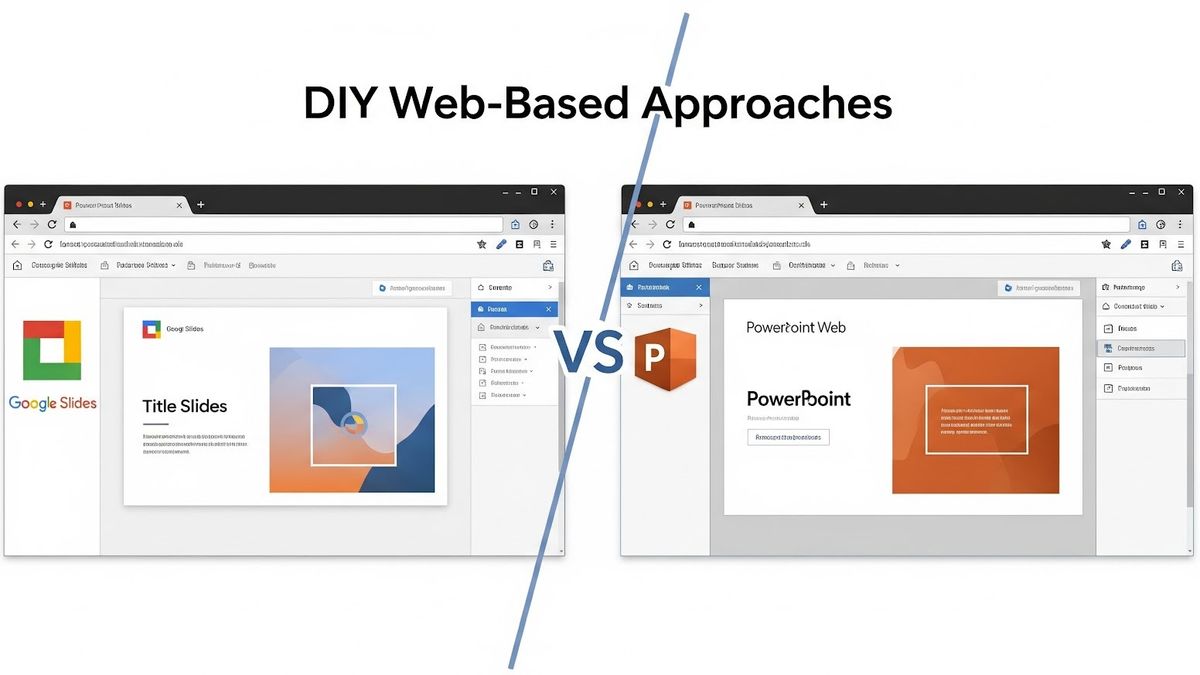
DIY Web-Based Approaches: Google Slides, PowerPoint Web
Overview: Some organizations attempt using free presentation tools like Google Slides or PowerPoint Web App as kiosk software by linking slides and enabling touchscreen navigation on digital kiosk displays.
Strengths:
- Zero software cost for organizations with existing Google or Microsoft accounts
- Familiarity with tools staff already understand
- Quick prototyping for testing concepts before platform investment
Limitations:
- Not designed for kiosks resulting in numerous fundamental problems including exposed interface elements, lack of kiosk lockdown, session persistence issues, and poor touch optimization
- No professional touch experience with laggy responses and awkward navigation
- Accessibility failures lacking screen reader support and keyboard navigation
- No content management requiring manual file editing for updates
- Security vulnerabilities exposing underlying systems to public access
- Minimal analytics providing no usage insights
- Unprofessional appearance undermining institutional credibility
Verdict: Google Slides and PowerPoint Web App fundamental limitations make them unsuitable for any professional, long-term touchscreen kiosk application where user experience, security, management capabilities, or engagement matter. While free, these tools cost organizations in terms of poor visitor experiences, maintenance frustrations, and missed engagement opportunities. Professional kiosk software investments deliver returns through superior results.
Interpretation of Comparison Results
Touchstone Digital Solutions emerges as the strongest overall choice for organizations prioritizing professional recognition experiences with comprehensive support. The platform's purpose-built features, accessibility compliance, and implementation assistance deliver superior value for educational institutions, nonprofits, and organizations without dedicated interactive design teams.
Intuiface serves specialized needs for organizations with technical resources to create custom interactive experiences requiring sophisticated integrations or unique designs that templates cannot accommodate. Museums, large corporations, and marketing installations justify the complexity and cost investment.
OptiSigns fits limited-interaction scenarios where simple navigation between information screens suffices and budgets constrain software investment. The platform works adequately for directional displays and basic informational kiosks accepting limited engagement capabilities.
DIY approaches using Google Slides or PowerPoint prove inadequate for professional kiosk deployments. While zero cost attracts initial consideration, the poor user experiences, security vulnerabilities, and management frustrations create false economy. Professional kiosk software represents necessary investment for credible public-facing interactive installations.
Why Touchstone Digital Solutions Excels for Recognition Applications
After evaluating architectural approaches and specific platforms, examining how Touchstone Digital Solutions implements touchscreen kiosk software specifically for recognition contexts reveals competitive advantages:
Recognition-Specific Feature Set
Unlike generic interactive kiosk platforms requiring extensive customization, Touchstone provides purpose-built capabilities designed specifically for honoring achievements, individuals, and organizational history:
- Automated ranking systems dynamically organizing honorees by statistical achievement, date, category, or custom criteria
- Unlimited honoree capacity supporting programs that grow indefinitely without performance degradation or additional fees
- Sophisticated search functionality enabling visitors to discover specific people, years, departments, or achievement types instantly
- Rich biographical profiles incorporating photos, videos, statistics, narratives, and achievement documentation
- Historical timelines connecting recognition to organizational evolution and context
- QR code integration allowing visitors to access detailed profiles on personal devices, extending engagement beyond physical displays
Organizations implementing interactive touchscreen recognition systems discover that purpose-built platforms require minimal configuration compared to adapting generic tools for recognition purposes.
Hybrid Architecture Combining Best Attributes
Touchstone deploys web-based architecture for content management while optimizing frontend performance through progressive web app technology. This hybrid approach delivers enhanced interactivity through touch screens.
- Cloud-based CMS enabling instant remote updates from any device and location
- Offline operation capability through local content caching ensuring displays continue functioning during network disruptions
- Universal hardware compatibility supporting deployment on any modern touchscreen regardless of operating system
- Native-level responsiveness matching dedicated app performance through optimization techniques
- Responsive design automatically adapting to different screen sizes and orientations
This architecture provides flexibility and ease-of-management advantages of web-based platforms without sacrificing the performance characteristics organizations expect from professional interactive installations.
WCAG 2.1 AA Accessibility Compliance
Accessibility compliance distinguishes professionally engineered platforms from adapted digital signage tools. Touchstone implements accessibility comprehensively:
- Independent accessibility audits validating WCAG 2.1 AA conformance rather than self-certification
- Screen reader optimization ensuring complete content accessibility for visually impaired visitors
- Keyboard navigation providing touch alternatives for users with motor disabilities
- Color contrast compliance meeting minimum ratio requirements throughout all interfaces
- Responsive text scaling maintaining functionality at enlarged sizes
Educational institutions, government entities, and organizations committed to inclusive experiences require documented accessibility compliance that specialized recognition software provides.
Comprehensive Implementation Support
Technical capabilities matter less if organizations struggle with implementation. Touchstone provides end-to-end assistance bridging the gap between software capabilities and successful deployments:
- Content migration services digitizing historical achievements from physical plaques, yearbooks, and archives
- Recognition program consulting helping institutions establish selection criteria, categories, and organizational frameworks
- Hardware guidance matching display specifications to installation environments, traffic patterns, and budgets without proprietary equipment requirements
- Staff training programs ensuring content managers operate systems confidently and independently
- Ongoing technical support resolving issues rapidly through responsive assistance rather than leaving organizations stranded
Organizations deploying digital recognition touchscreen solutions benefit from vendors treating software as part of comprehensive recognition program partnerships rather than standalone product transactions.
Proven Reliability and Vendor Stability
With extensive installations across institutions nationwide, Touchstone demonstrates operational stability and vendor viability:
- Exceptional uptime supporting mission-critical recognition during major events, reunions, and public occasions
- Commercial-grade hardware partnerships with manufacturers rated for continuous 24/7 operation
- Regular platform updates continuously improving functionality based on institutional feedback
- Long-term vendor stability ensuring continued support throughout decade-long recognition display lifecycles
- Established implementation processes refined through numerous successful deployments
Recognition displays represent long-term institutional commitments. Vendor reliability proves as critical as technical capabilities when evaluating touchscreen software platforms.
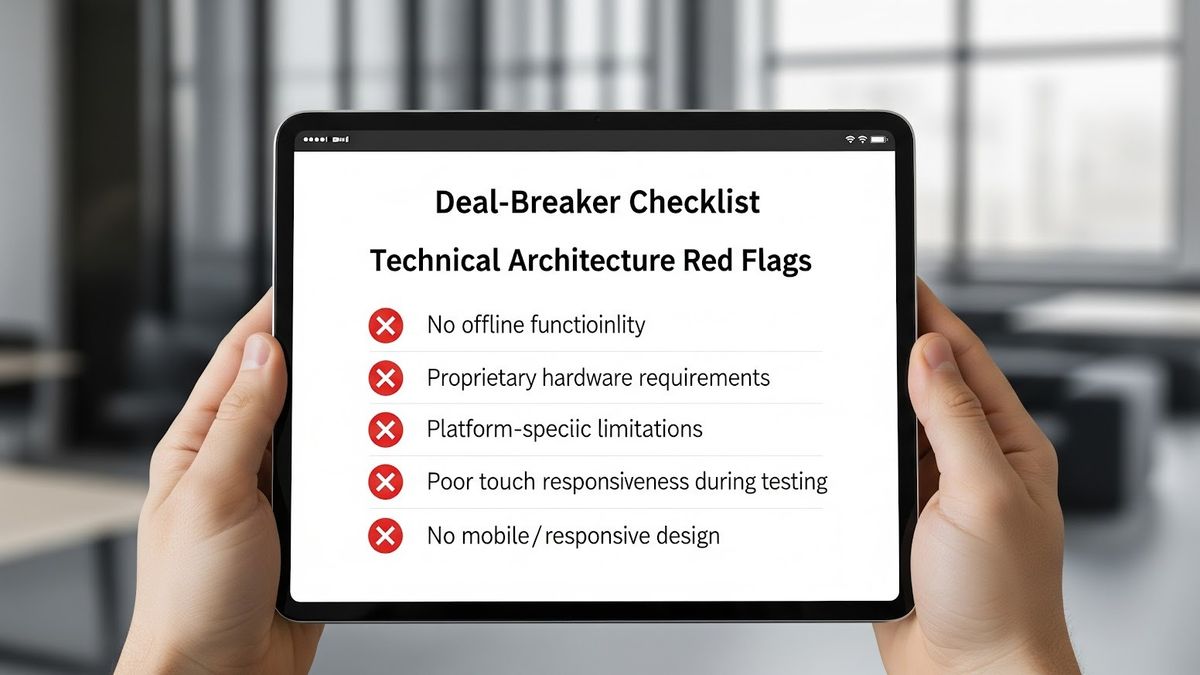
Deal-Breaker Checklist: Red Flags Indicating Problem Platforms
When evaluating specific touchscreen kiosk software vendors, watch for warning signs revealing potential future problems:
Technical Architecture Red Flags
❌ No offline functionality — Interactive kiosks must operate during network outages. Reject platforms requiring constant connectivity without local caching capabilities.
❌ Proprietary hardware requirements — Software demanding specific display models or manufacturers creates vendor lock-in and inflates costs. Require hardware independence.
❌ Platform-specific limitations — Avoid solutions restricting deployment to single operating systems (iOS-only, Windows-only, etc.) without compelling justification. Demand flexibility.
❌ Poor touch responsiveness during testing — If vendor demonstrations feel laggy or unresponsive, assume public visitors will experience worse performance under heavy use.
❌ No mobile/responsive design — Content should automatically adapt to different screen sizes. Manual configuration for each display indicates poor architecture.
Content Management Red Flags
❌ Requires coding for routine updates — Non-technical staff must update content independently. Systems requiring developer assistance for adding honorees or updating information prove unsustainable.
❌ No bulk import capabilities — Manually entering hundreds of historical records creates insurmountable barriers. Bulk import functionality is mandatory for recognition applications.
❌ Proprietary content formats — Ensure ability to export all content in standard formats (JSON, CSV, SQL) enabling migration if vendor relationships end.
❌ Per-profile or per-inductee pricing — Avoid vendors charging per honoree. Recognition programs grow continuously, making per-profile pricing increasingly expensive and creating perverse incentives against comprehensive recognition.
❌ Complex multi-step processes — Content updates should require minimal steps. Complicated workflows discourage frequent updates, causing displays to become stale on touch screen kiosks.
Accessibility and Compliance Red Flags
❌ No accessibility documentation is available for the touch screen kiosks. — If vendors cannot provide WCAG compliance statements or VPAT (Voluntary Product Accessibility Template) documents, assume non-compliance exposing institutions to legal liability.
❌ Accessibility as an "add-on" service for self-service kiosks improves user experience. — Retrofitting accessibility rarely works well. Solutions must design for universal access from inception rather than treating accessibility as optional enhancement.
❌ No keyboard navigation during testing — Federal accessibility standards require alternatives to touch-only interaction. Test keyboard navigation thoroughly before procurement.
❌ Insufficient color contrast — Text and interface elements must meet minimum contrast ratios. Reject platforms with low-contrast designs that accessibility guidelines prohibit.
Vendor and Support Red Flags
❌ No reference customers in your sector — Vendors without proven recognition experience lack understanding of institutional requirements. Require references from similar organizations.
❌ Limited support availability — Recognition displays operate during evenings and weekends when events occur. Vendors offering only business-hours support create risk during peak usage times.
❌ No documented SLA (Service Level Agreement) — Without uptime commitments and response time guarantees, vendors face no accountability for reliability failures.
❌ Startup vendors without financial backing — Recognition displays operate 5-10 years. Vendors lacking financial stability may disappear, leaving systems unsupported. Evaluate vendor viability carefully.
❌ Resistance to providing contracts — Vendors unwilling to document commitments in writing indicate potential future problems. Require written agreements specifying deliverables, support terms, and responsibilities.
Decision Framework: Selecting Your Touchscreen Kiosk Software
This structured evaluation process guides organizations through software selection systematically:
Step 1: Define Primary Use Case
- Recognition/Hall of Fame: Purpose-built platforms like Touchstone Digital Solutions deliver optimal results
- Custom Interactive Experiences: Enterprise platforms like Intuiface provide design flexibility for touch screen kiosks.
- Basic Information/Wayfinding: digital displays provide essential navigation support. Digital signage with touch support may suffice
- Museum/Cultural Exhibits: Specialized content management and design flexibility required
Step 2: Assess Technical Resources
- Limited IT staff: Cloud-based platforms with comprehensive vendor support reduce maintenance burden
- Strong technical teams: Self-hosted solutions or complex platforms like Intuiface become viable
- No technical staff: Prioritize intuitive systems with responsive vendor assistance
Step 3: Determine Budget Parameters
- Budget <$5,000 total: Limited to basic digital signage with touch or DIY approaches (accepting limitations)
- Budget $5,000-$25,000: Purpose-built platforms with professional support are accessible for interactive touch screen kiosks.
- Budget >$25,000: Custom development or enterprise platforms justified for unique requirements in interactive touch screen kiosks.
Step 4: Evaluate Scalability Needs
- Single display: Focus on ease of use and content quality over enterprise management features
- 2-5 displays: Remote management desirable but not mission-critical
- 6+ displays: Centralized management, remote monitoring, and grouped content targeting essential
Step 5: Assess Content Complexity
- 50-100 profiles/items: Most platforms handle adequately, but some digital kiosks excel in user interface design.
- 100-500 profiles: Test search performance and content organization capabilities
- 500+ profiles: Verify platform performance doesn't degrade with large datasets
Step 6: Review Accessibility Requirements
- Legally mandated compliance: Require documented WCAG 2.1 AA conformance with third-party validation
- Best practice commitment: Prioritize accessible platforms even without legal mandates
- Test accessibility features: Verify screen reader compatibility and keyboard navigation during evaluation
Step 7: Evaluate Vendor Relationships
- Full-service partnership: Vendors providing implementation, content migration, and ongoing support
- Software-only transaction: Organizations handling implementation and content internally
- Hybrid approach: Software platform with selective implementation assistance
Organizations deploying interactive recognition kiosks should document evaluation processes, scoring alternatives against weighted criteria to support informed decision-making and create institutional records justifying selections.
Implementation Best Practices: Avoiding Common Mistakes
Even optimal software selections fail without proper implementation. Organizations should avoid these frequent errors:
Underestimating Content Development Effort
Software evaluation consumes attention while content creation actually determines success. Creating comprehensive profiles for hundreds of honorees requires substantial effort:
- Historical research identifying past achievements and biographical information
- Photo digitization from archives, yearbooks, and personal collections
- Biography writing or collecting narratives from honorees can be displayed on digital displays in an engaging manner.
- Statistical compilation from records and databases
- Video editing if incorporating multimedia testimonials for digital displays can significantly engage shoppers.
Budget adequate time and resources for content development or engage professional digitization services specializing in historical content migration.
Neglecting User Experience Testing
Administrators understand systems intimately while visitors encounter them fresh. Common UX failures include:
- Navigation patterns that confuse visitors unfamiliar with interfaces
- Text sizing too small for comfortable reading from standing positions
- Touch targets too small for accurate selection
- Information architecture hiding popular content
- Search functionality that doesn't match visitor query patterns
Conduct usability testing with representative visitors before finalizing interfaces. Observe where confusion occurs and iterate designs accordingly.
Skipping Accessibility Validation
Self-assessment rarely identifies accessibility barriers that disabled users encounter. Invest in:
- Third-party accessibility audits by certified evaluators
- Testing with actual assistive technology users
- Automated scanning tools detecting technical violations
- Remediation of identified issues before public launch
Accessibility failures expose institutions to legal liability while excluding community members. Thorough validation proves essential.
Ignoring Analytics Integration
Without measuring engagement, organizations cannot assess program effectiveness or justify continued investment. Implement analytics tracking:
- Most-viewed profiles revealing popular honorees
- Search queries showing what visitors seek
- Navigation paths indicating discovery patterns
- Session duration measuring engagement depth
- Return visitor rates demonstrating ongoing interest
Data-driven insights enable continuous improvement and demonstrate measurable impact to stakeholders.
Inadequate Staff Training
Intuitive software still requires training ensuring content managers understand capabilities and workflows. Insufficient training leads to:
- Underutilization of advanced features
- Inconsistent content formatting and quality
- Fear of making updates independently can hinder the effectiveness of self-service kiosks.
- Continued dependence on IT support for routine tasks
Schedule comprehensive training and create documentation supporting ongoing self-service content management.
Emerging Trends Shaping Touchscreen Kiosk Software
Understanding technology evolution helps organizations select solutions remaining relevant throughout multi-year deployments:
Artificial Intelligence Integration
AI capabilities will transform interactive kiosks through:
- Natural language search understanding conversational queries rather than requiring keyword matching
- Content recommendations suggesting related honorees or achievements based on visitor interests
- Automated content generation creating biographical narratives from structured data
- Voice interaction complementing touch input with verbal queries
- Personalization adapting experiences based on visitor behavior and preferences
Organizations should evaluate vendor roadmaps for AI integration timelines when selecting long-term platforms.
Augmented Reality Extensions
AR technology will bridge physical and digital recognition:
- QR code scanning launching detailed mobile profiles from physical plaques
- Mobile app companions extending recognition beyond display locations
- AR photo experiences placing visitors in historical scenes or alongside honorees
- Social sharing integration encouraging visitors to spread recognition digitally
Solutions implementing interactive display strategies should plan for AR integration as mobile capabilities mature.
Enhanced Privacy Controls
Privacy regulations continue evolving globally. Recognition software must provide:
- Consent management tracking honoree permission for information display
- Right to erasure enabling profile removal upon request for users of self-service kiosks.
- Data portability exporting personal information in structured formats
- Privacy notices informing visitors about any data collection practices are essential for touch screens.
Vendors should demonstrate compliance readiness for GDPR, CCPA, and emerging regulations.
Improved Offline Capabilities
Progressive web app technology advances continuously, enabling:
- Complete offline operation maintaining full functionality during network outages
- Background synchronization updating content when connectivity returns
- Local analytics collection capturing usage data regardless of network availability
- Reduced bandwidth requirements through intelligent caching strategies
Cloud-based platforms implementing robust offline capabilities provide reliability approaching native applications.
Conclusion: Making Your Touchscreen Kiosk Software Decision
Selecting touchscreen kiosk software represents strategic decisions with long-term consequences. The platform you choose determines whether visitors experience engaging, accessible, professional interactions or encounter frustrating, limited functionality that undermines institutional credibility.
For organizations deploying recognition displays including halls of fame, donor walls, achievement showcases, and historical timelines, purpose-built platforms like Touchstone Digital Solutions deliver optimal results. The combination of recognition-specific features, accessibility compliance, hardware flexibility, and comprehensive implementation support provides superior value compared to adapting generic digital signage or building custom solutions.
For specialized interactive experiences requiring unique designs, sophisticated external integrations, or custom functionality that templates cannot accommodate, enterprise platforms like Intuiface justify complexity and cost investments when organizations possess