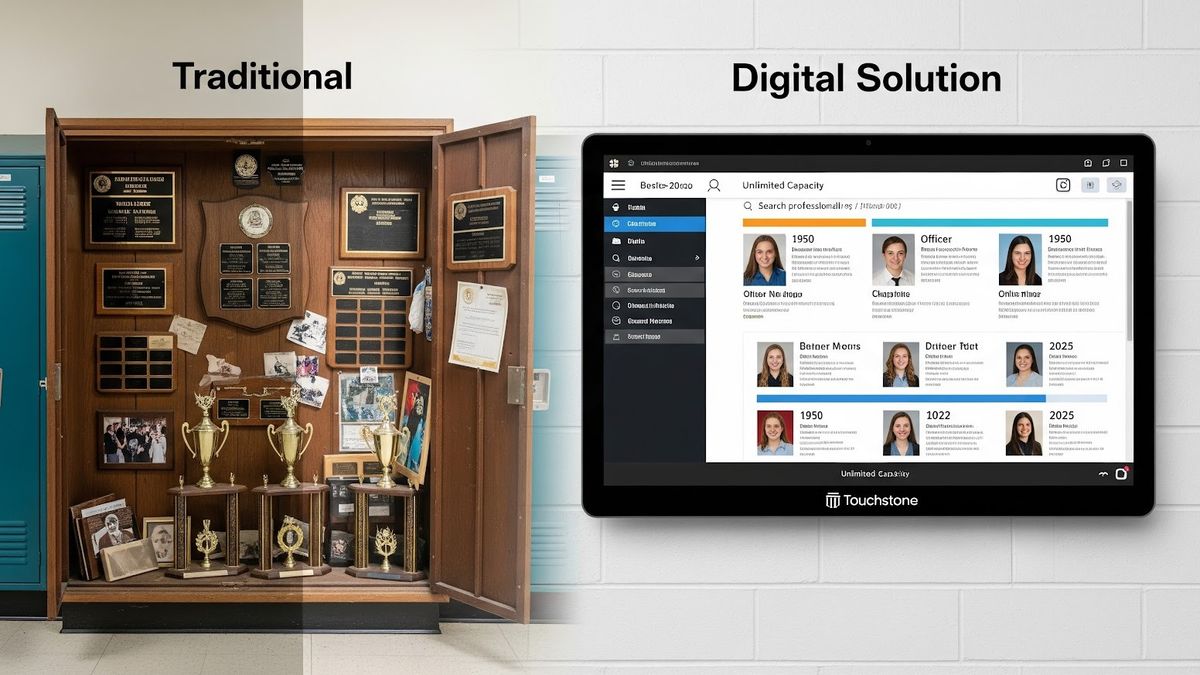
The history of your school is not meant to rest on dusty shelves in some back storage room; that is your edge. Any grand-picture shot, yearbook, or any moment in history that has contributed to the making of an institution? Well, that's not nostalgia. That is your logo.
The problem is most schools treat their archives like that junk drawer in your kitchen, neglecting the value of their school yearbooks. You know it's important, and you know there's value somewhere in there, but good luck finding anything when you actually need it in the digital collection.
Summer Academy digital archives accomplish this. Transform history from buried treasure to a living artifact in the digital age that works for you around the clock, especially in the context of local history and ancestry. Let's discuss how to get a digital yearbook delivered in reality.
Why Your Institution Needed Digital Archives Yesterday
Here's the reality: prospective families don't tour your campus at 2 AM, and they might be searching for your school library online. digital yearbook online. But they're definitely researching you at 2 AM.
Digital school archives give you a permanent recruiting advantage by showcasing the school’s history and making it accessible to public libraries. When a family discovers your school sent three players to the Olympics, produced a Pulitzer Prize winner, or maintains an unbroken tradition spanning 150 years, that's not marketing fluff. That's proof.
Beyond recruitment, you're solving real estate problems to enhance the accessibility of your historical records. Physical plaques and trophy cases eat up prime hallway space that could showcase current achievements in your school community instead of being filled with outdated historical documents. Digital archives consolidate centuries of history without sacrificing a single square foot.
On another note, this is exactly what your alumni want from the school library: access to digital copies of their past and school memories. They will fund this project, collaborate, and congregate around it, thereby strengthening donor relations and securing better fundraising results for the internet archive ahead.
Start With High-Quality Digitization Standards
Don't cheap out here; investing in quality digitization ensures that your school's history and digital copies are preserved for future generations. Your yearbook digitization needs to be done right the first time because you're not doing this twice; maintaining the integrity of your school's history is crucial.
Professional scanning means 300-600 DPI minimum for all photographs included in your digital collection, ensuring high-quality digital copies of your school's history. That's the elaborate difference between legible text and blurry garbage in a school library. Non-destructive scanning methods, book-edge scanners, or V-cradles might be the way to go for your fragile 1950s-era yearbooks collection, ensuring school memories do not fall apart during the operation.
Here is where the real magic begins with OCR technology for digitizing high school yearbooks. Optical Character Recognition transposes a scanned image into searchable text, making it easier to access school memories and historical documents for research. An alumna, then, can find her name among the 40 years of yearbooks in just three seconds, thanks to the digitization of school memories. Try doing that with a dusty shelf.
Services like Bound Book Scanning handle this at roughly $3-4 per book, delivering searchable PDFs of school memories with your originals returned undamaged. That's a small price for permanent preservation.
Build a Smart Organizational Structure
Random digital files are just as useless as random physical files, especially when they lack public access for preserving school memories. You need structure for your school yearbooks collection.
Organized by graduation year first; the second-level division is into sections of athletics, academics, theater, clubs, faculty, and local history. Now, tag whatever you can: student names, activities, events, page numbers, and anything anyone could possibly search for in the context of your yearbooks collection and school community.
Better start thinking about paths for discovery. Some users browse chronologically through digital copies of historical documents to trace their ancestry. Some do it by sport, by person, or by the year, creating a rich tapestry of school memories. Your system should support all of these, but it shouldn't give anyone the feeling that they're navigating a mass stream-like storage database from 1997, which could hinder access to historical documents.
The cloud gives you truly scalable capacity, access from any device, and redundant storage, in general, all things you need to maintain your own set of servers for your yearbooks collection and ensure public access. Nothing spells out the very essence of "institutional nightmare" quite like losing decades' worth of digital archives to a hard drive that simply decided to give up on you, especially when those archives contain vital information about students.
Navigate Privacy and Compliance Requirements
FERPA isn't optional, and yearbooks contain directory information about students that could be protected under federal law.
Here's your safety play: implement age-based access restrictions to protect sensitive information about students while still allowing public access to historical documents. An 18-year limit keeps all current minors out of searchable online digital collections. Some institutions go with a 5-10 year restriction to be extra cautious with their online digital collections.
For current yearbooks, in respect and sensitivity, any kind of personal information, addresses, phone numbers... anything that would make you uncomfortable were your own children to be there, should be considered for redaction.
Some important copyright considerations may be there. Works before 1928 are in the public domain, allowing for public access to historical documents. After 1977, the work enjoyed protection for 95 years. Know exactly what you are working with before you publish any content on the internet, ensuring accessibility for all.
Choose the Right Platform for Your Needs
Your platform choice determines whether this project becomes a legacy asset or a maintenance headache.
Advantage Archives operates on a no-cost model for qualifying partners, handling digitization and hosting without subscription fees, making it easier for schools to share their history with public access. They work with over 500 institutions nationwide using archival standards designed for 500-year preservation.
Others, such as eRecordsUSA, also specialize in huge archival-grade digitization with full OCR processing for K-12 schools, private academies, or universities.
The key is finding a partner who understands institutional needs, not just scanning documents, but also preserving primary source materials. You're building a permanent digital legacy, not uploading files to Dropbox.
Plan for Long-Term Success
Technology changes, but the importance of preserving school memories remains constant. File formats become obsolete. What works today in preserving school yearbooks might not work in 2045.
- Select open file formats that won't become unreadable in 20 years, ensuring that future generations can access primary source materials related to your school’s history.
- Implement comprehensive metadata standards so future administrators understand what they're looking at in the context of genealogical research.
- Budget for periodic migration to new platforms as technology evolves, ensuring the preservation of your yearbooks collection in the internet archive for public access.
The best systems are maintained systems. Assign ownership internally to someone who updates content, manages access, and keeps the internet archive current. Without that, you've just created a really expensive time capsule that nobody opens.
Turn Archives Into Educational Resources
Here's where it gets interesting. Digital archives function as primary sources for history education and research, particularly when it comes to high school yearbooks.
Students engage more actively with digitized primary sources than textbooks. They develop critical thinking skills by analyzing real historical materials from their own institution. That 1960s newspaper article about desegregation? That's not abstract history; that's your school's story preserved in historical records and accessible through public libraries.
Alumni engagement skyrockets when they can access the yearbooks and relive their past glories on an online platform. In horrendous philanthropist relationships, or a little less in some volunteer support, engagement guarantees a great deal in creating an authentic institutional connection with the historical society.
Make It Happen
High school digital archives aren't created just for preservation purposes; it's about gaining a little bit more competitive edge; it's about enhancing community engagement and telling your institution's true story with a voice that really resonates.
Aiming to create dynamic digital showcases out of static displays and forgotten yearbooks, while highlighting the school’s history? Touchstone Digital Solutions Creates powerful touchscreen software to give your everlasting image a little life, enhancing public access to school memories. Our cloud-based platform allows your story to actualize history into interactive experiences that can be viewed from any location because your story deserves better than some dusty shelf!